Revenue Cycle Management (RCM) is the financial backbone of every healthcare organization. From the moment a patient schedules an appointment to the final payment collection, RCM governs how healthcare providers generate revenue. When managed properly, it ensures steady cash flow, fewer claim denials, and improved operational efficiency. When mismanaged, it leads to delayed payments, compliance risks, and financial instability.
What Is Revenue Cycle Management (RCM)?
Revenue Cycle Management is the process healthcare organizations use to track patient care episodes from registration to final payment. It integrates administrative, clinical, and financial functions to capture, manage, and collect patient service revenue.
RCM includes:
Patient scheduling and registration
Insurance eligibility verification
Medical coding and charge capture
Claim submission and follow-up
Payment posting
Denial management
Patient billing and collections
An effective RCM system ensures that providers are paid fully and promptly for the services they deliver.
The Importance of Revenue Cycle Management in Healthcare
RCM directly impacts a practice’s profitability and sustainability. Even small inefficiencies can lead to significant revenue losses over time.
Key Reasons RCM Is Critical
Ensures accurate reimbursement
Reduces claim denials and rejections
Improves cash flow
Maintains regulatory compliance
Enhances patient billing transparency
With shrinking reimbursement rates and increasing regulations, strong RCM is no longer optional—it is essential.
Key Stages of the Revenue Cycle
1. Patient Scheduling and Pre-Registration
The revenue cycle begins before the patient visit. Accurate data collection during scheduling reduces errors later in the process.
2. Insurance Eligibility and Verification
Verifying insurance coverage ensures services are billable and helps identify patient financial responsibility upfront.
3. Medical Documentation
Providers must document services clearly and accurately to support coding and billing.
4. Medical Coding
Certified coders translate documentation into standardized codes (ICD-10, CPT, HCPCS). Correct coding ensures proper reimbursement and compliance.
5. Charge Capture
All billable services must be captured accurately to prevent revenue leakage.
6. Claim Submission
Claims are submitted electronically to payers. Clean claims increase first-pass acceptance rates.
7. Payment Posting
Payments, adjustments, and EOBs are posted to patient accounts accurately.
8. Denial Management
Denied or underpaid claims are analyzed, corrected, and appealed promptly.
9. Patient Billing and Collections
Remaining balances are billed to patients clearly and transparently.
Common Revenue Cycle Management Challenges
Many healthcare providers struggle with RCM due to its complexity.
1. High Claim Denial Rates
Denials often occur due to coding errors, missing information, or eligibility issues.
2. Inefficient Front-End Processes
Errors in registration and insurance verification cause downstream billing problems.
3. Lack of Skilled Staff
RCM requires trained professionals who understand payer rules and compliance standards.
4. Technology Limitations
Outdated systems slow down workflows and increase errors.
5. Compliance Risks
Incorrect coding or billing practices can lead to audits and penalties.
How Effective RCM Improves Financial Performance
A well-managed revenue cycle delivers measurable benefits.
Improved Cash Flow
Faster claim processing and collections reduce days in accounts receivable.
Reduced Revenue Leakage
Accurate charge capture ensures no services go unbilled.
Lower Denial Rates
Root-cause analysis prevents repeat errors.
Better Decision-Making
Detailed reporting helps providers identify areas for improvement.
Benefits of Outsourcing Revenue Cycle Management
1. Increased Collections
Professional RCM services often improve reimbursement rates through accuracy and follow-up.
2. Reduced Administrative Burden
Staff can focus on patient care instead of billing tasks.
3. Cost Savings
Outsourcing eliminates the need for in-house billing staff, training, and software.
4. Access to Expertise
RCM companies employ experienced professionals who stay current with regulations.
5. Scalability
Outsourced RCM adapts easily to practice growth or seasonal volume changes.
Who Needs RCM Services?
RCM services benefit:
Independent physician practices
Multi-specialty clinics
Hospitals and health systems
Behavioral health providers
Specialty practices
Any provider seeking better financial performance can benefit from professional RCM support.
Why Choose Billing Care Solutions for RCM?
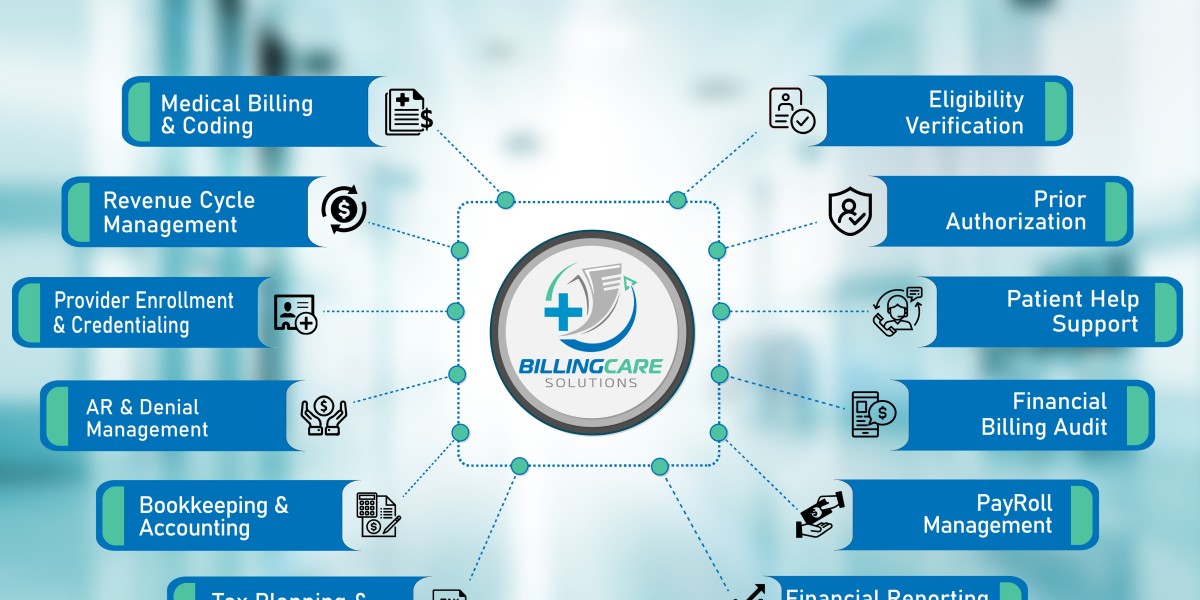
Billing Care Solutions delivers end-to-end RCM services designed to optimize revenue and reduce administrative stress.
Our RCM Services Include:
Front-end eligibility verification
Medical billing and coding
Claims submission and follow-up
Denial management and appeals
Payment posting and reporting
Patient billing support
Our Advantages
Customized RCM solutions
Experienced billing professionals
Advanced technology
Transparent reporting
Dedicated account management
Key RCM Metrics to Monitor
Tracking performance metrics helps improve revenue outcomes.
Important KPIs include:
Days in accounts receivable
Clean claim rate
Denial rate
Net collection rate
First-pass resolution rate
Billing Care Solutions provides detailed reports to help practices monitor and optimize these metrics.
The Future of Revenue Cycle Management
RCM is evolving with technology and regulatory changes.
Key Trends Include:
Automation and AI-driven billing
Predictive analytics
Value-based care reimbursement models
Improved patient financial engagement
Practices that partner with modern RCM providers are better positioned for long-term success.
Conclusion
Revenue Cycle Management is essential to the financial success of healthcare providers. From patient registration to final payment, every step of the revenue cycle impacts cash flow, compliance, and sustainability.
By partnering with Billing Care Solutions, healthcare providers gain access to expert RCM services that improve collections, reduce denials, and streamline operations—allowing providers to focus on delivering exceptional patient care.
Call to Action
? Want to improve your revenue cycle performance?
Contact Billing Care Solutions today and let our RCM experts maximize your revenue efficiently and compliantly.