
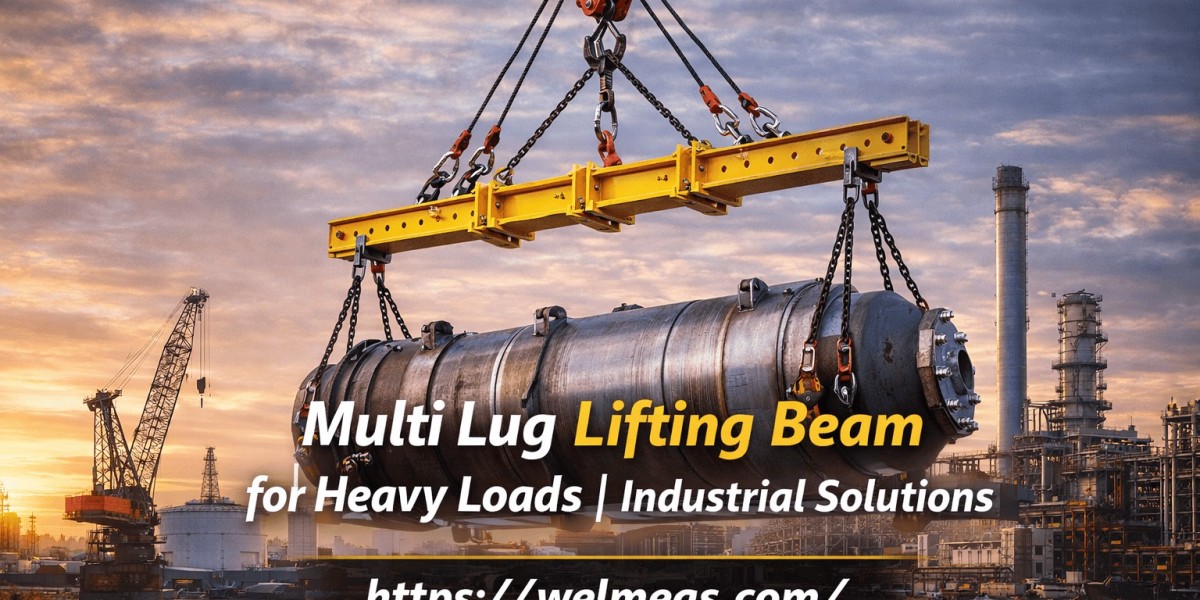
If you’ve spent time around heavy lifting operations, you quickly learn that not all loads behave the same way. Some are long, some are awkward, some have shifting centers of gravity, and some just refuse to lift cleanly no matter how carefully you rig them. Over the years, I’ve seen many lifting setups struggle simply because the beam wasn’t flexible enough. That’s where a Multi Lug Lifting Beam starts to make real sense.
Rather than forcing a load to fit a fixed lifting configuration, this type of beam gives riggers options. And in industrial environments, options usually mean fewer problems, safer lifts, and smoother operations overall.
Understanding the role of a Multi Lug Lifting Beam
A Multi Lug Lifting Beam is designed with multiple lifting lugs positioned along the beam length. These lugs allow operators to choose the most suitable pick points based on load size, weight distribution, and lifting geometry. In practice, this means you’re not locked into one configuration.
I’ve noticed that when teams use a Multi Lug Lifting Beam, they spend less time improvising with slings and shackles. Instead of fighting imbalance, they work around it. This flexibility is especially useful when dealing with structural steel, machinery skids, precast elements, or fabricated assemblies.
Compared to basic beams, this design feels more forgiving in real-world conditions.
Why fixed lifting points often fall short
Limited adaptability on site
Fixed lifting beams work well when loads are consistent. But industrial sites rarely offer that luxury. Load dimensions change, attachment points vary, and drawings don’t always match reality. A Multi Lug Lifting Beam adapts without needing additional equipment.
Increased stress on rigging gear
When lifting points aren’t ideal, slings take uneven loads. Over time, this causes unnecessary wear. I’ve seen how switching to a Multi Lug Lifting Beam reduces that stress by allowing better load alignment from the start.
How modular concepts improve lifting efficiency
The advantage of a modular approach
A Modular Spreader beam takes flexibility one step further. By allowing sections or lug configurations to be adjusted or expanded, it supports a wider range of lifting scenarios. In combination with a Multi Lug Lifting Beam, this approach reduces the need for multiple beam types on site.
From a practical standpoint, modular systems simplify logistics. Fewer beams to store. Fewer last-minute adjustments. Less downtime waiting for the “right” equipment.
Real benefits in daily operations
Using a Modular Spreader beam alongside a multi-lug design makes lifts more predictable. Crews quickly learn which lug positions work best for different loads, and that knowledge carries forward. Over time, lifts become smoother and more controlled.
Applications where Multi Lug Lifting Beams shine
A Multi Lug Lifting Beam is especially effective in environments where loads vary frequently. Shipyards, fabrication yards, oil and gas facilities, and large warehouses all benefit from this adaptability.
I’ve seen these beams used successfully for lifting:
- Large fabricated frames
- Heavy machinery modules
- Concrete elements with uneven weight distribution
- Structural assemblies with offset centers
In many of these cases, a standard Modular Spreader beam alone wouldn’t be enough without multiple lug options.
Engineering considerations that actually matter
Load ratings and lug placement
One thing experienced engineers pay close attention to is lug spacing. A well-designed Multi Lug Lifting Beam doesn’t just add more lugs—it places them where they make sense structurally. Each lug is rated, tested, and positioned to maintain beam integrity under load.
Build quality over appearance
In industrial lifting, looks don’t matter much. What matters is how the beam behaves after months or years of use. A properly engineered Multi Lug Lifting Beam maintains alignment, resists deformation, and keeps lug tolerances tight. That consistency builds trust among operators.
Safety feels different when the beam works with you
Reduced load movement
One of the first things people notice when using a Multi Lug Lifting Beam is how calm the load feels in the air. Balanced lifts swing less, rotate less, and settle faster. That has a direct impact on safety.
Better communication during lifts
When the setup is right, crews communicate more calmly. Signals are clearer. Operators don’t rush. A Modular Spreader beam combined with multiple lug options reduces guesswork, which is often where accidents begin.
Why customization matters in the UAE industrial landscape
Industrial projects in the UAE often involve large-scale fabrication, extreme environmental conditions, and tight schedules. A Multi Lug Lifting Beam designed for these realities performs better than generic imports.
Manufacturers like WELMEQS understand local working conditions, from temperature extremes to industry-specific requirements. Their approach to Modular Spreader beam systems reflects real operational needs rather than theoretical designs.
Long-term value beyond the initial lift
A Multi Lug Lifting Beam isn’t just a tool for one project. Over time, it becomes part of a site’s lifting strategy. Teams learn its behavior. Engineers trust its limits. Operators know which configurations work best.
When paired with a Modular Spreader beam design philosophy, the equipment evolves with project demands instead of becoming obsolete.
Final thoughts from hands-on observation
After watching countless lifts over the years, one thing stands out: flexibility reduces risk. A Multi Lug Lifting Beam gives teams room to adapt, adjust, and lift with confidence. It doesn’t force the load into a fixed setup—it meets the load where it is.
When combined with the versatility of a Modular Spreader beam, the result is a lifting solution that feels practical, reliable, and grounded in real-world use. For heavy industrial operations, that kind of reliability isn’t a luxury. It’s a necessity.